
Before sending a deposit for a used excavator, buyers should confirm that the machine shown in photos, video, and quotation is the same unit being offered for export. One of the most useful checks is the machine identification nameplate, together with the excavator serial number or PIN.
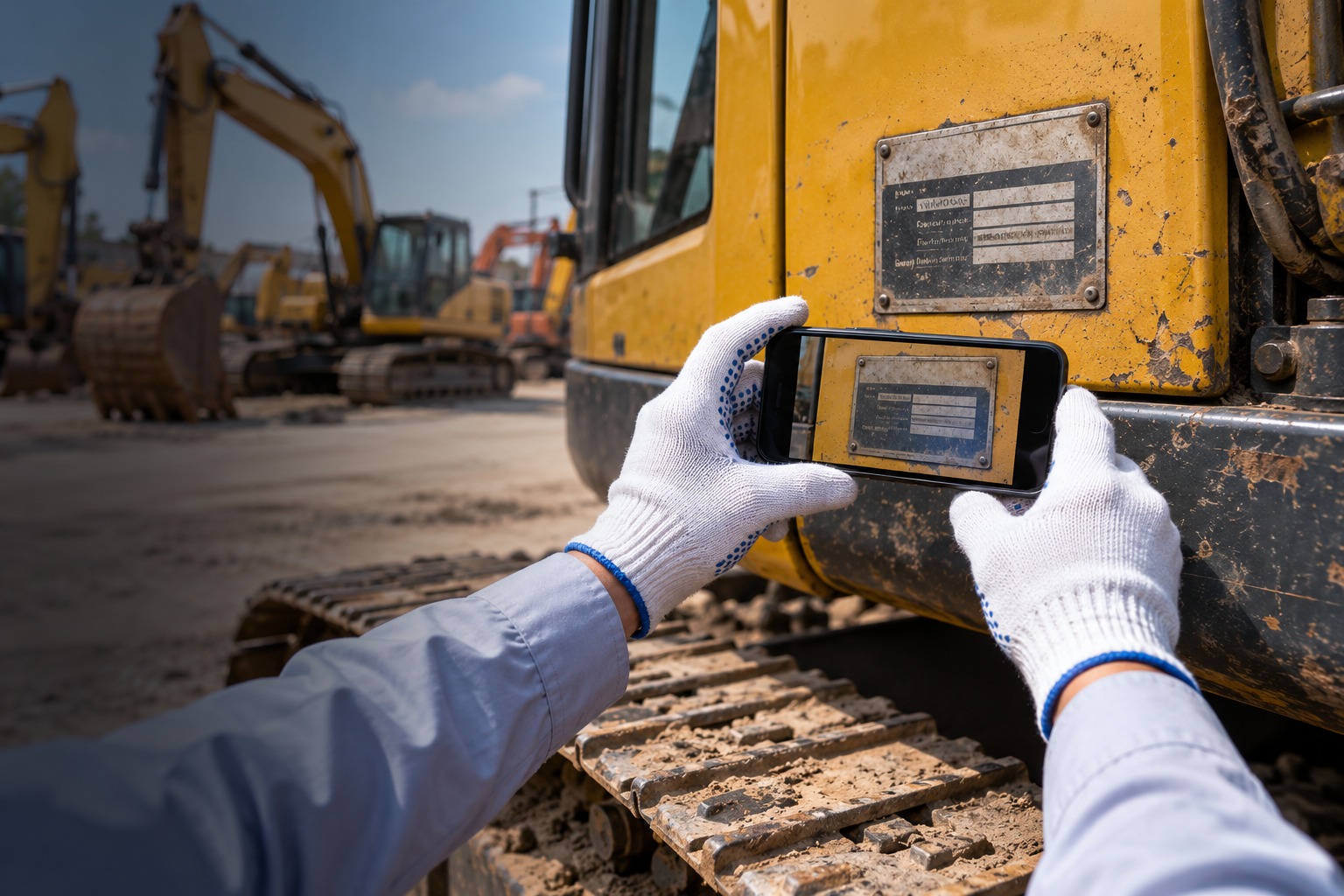
A nameplate is not a complete condition report, and it does not replace a working inspection. It is an important first step because it helps a buyer connect the advertised machine to its basic identity before payment and shipment.
The information shown on an excavator nameplate varies by manufacturer, model, market, and production year. It may include the manufacturer, model, serial number or PIN, machine type, engine data, operating mass, or production information. The exact layout is not the same on every machine.
For an import buyer, the most important point is consistency: the model and identifying number on the plate should match the supplier’s quotation, the machine photos, the inspection video, and the export documents prepared for that unit.
Request at least three photos before making a payment:
Ask the supplier to take new photos for your inquiry instead of sending only catalogue images. A current photo can show whether the plate is present, whether it is attached in its normal position, and whether the overall condition of the surrounding frame looks consistent with the listed machine.
Compare the nameplate details with the product listing and quotation. Check the stated model, the serial number or PIN where available, and the machine type. Then compare visible details such as the boom, arm, bucket, undercarriage, cab, counterweight, and paint condition with the rest of the photos.
Do not rely only on a title such as “CAT 320” or “Komatsu PC200.” Many versions of the same model exist, and equipment listings can use a broad model name. The nameplate and real machine photos help you ask more precise questions about configuration and condition.
If the plate is damaged, missing, newly replaced, or difficult to read, do not assume the machine is unsuitable. Ask for a clear explanation, additional photos, and a video that shows the plate in context. Serious buyers should keep the answer together with the quotation records.
A useful verification video should not show the nameplate as a separate clip only. Ask the supplier to start with a wide view of the excavator, walk to the nameplate, show it clearly, and then continue with the cab, hour meter, engine area, hydraulic actions, travel, swing, boom, arm, and bucket operation.
This simple sequence makes it easier to see that the identifying plate belongs to the same excavator that is working in the video. For used equipment, that connection is more valuable than receiving many short, unrelated clips.
Before arranging payment, ask the supplier which machine details will appear on the commercial invoice, packing list, and other export documents. The model description should be clear and should match the machine you approved. Requirements can differ by destination country, so importers should also confirm their own local rules with the relevant authorities, customs broker, or forwarder.
For a faster quotation, send the destination country or port together with your target model. This lets the supplier confirm whether the selected unit is suitable for the requested shipping plan and trade term.
These points do not automatically prove that there is a problem. They are signs that a buyer should ask more questions, request better evidence, or arrange an independent inspection before confirming the order.
SHUNXIN can provide current machine photos, working videos, condition details, and export quotation for available used excavators. Buyers can also request additional checks based on the machine model and destination port.
Browse available used excavators or send your target model and destination to request photos, inspection video, and FOB/CIF quotation.
2026 © Shun Xin Construction Co Ltd,. All Right Reserved.


 EN
 ES
 FR
 RU
 AR
 PT