
The engine and undercarriage usually get the first look on a used excavator. The boom, arm and bucket linkage deserve the same attention. They carry repeated digging loads every day, and wear at the pins or cylinder seals can turn into a repair that is much easier to discuss before purchase than after delivery.
No single photo can measure bushing wear. What a buyer can do is ask for the right close views and a simple working demonstration, then compare what is shown with the machine’s age, hours and asking price.
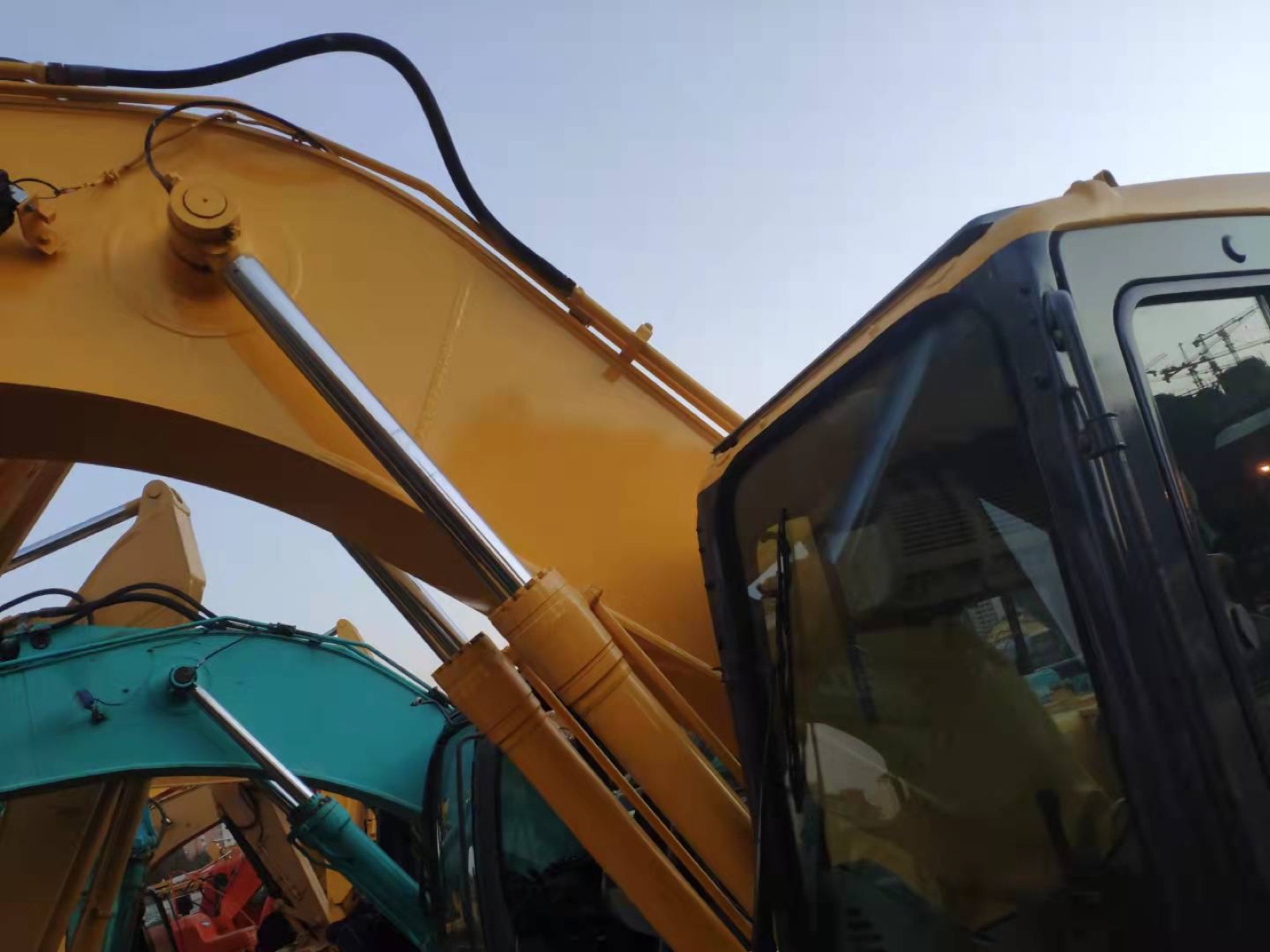
Ask for photos from both sides of the boom base, not only a distant side view of the complete machine. Look for cracked paint around the pin boss, fresh grinding marks, added welds or grease mixed with dust. A clean, greased joint is normal; the question is whether the area still looks even and well supported.
In a short video, ask the operator to place the bucket on firm ground and gently curl or raise it. Watch the boom-to-arm pin, the arm-to-bucket pin and the linkage. Some movement is expected on a working machine. A sharp knock, obvious gap or visible sideways jump is the point to ask for a closer inspection or a repair estimate.
Grease protects pins and bushings, so recent grease is not a warning by itself. But a thick layer can also hide the edge of a worn pin boss. Ask for one wiped-clean close-up before new grease is applied, especially on a machine that will work long hours or use a breaker.
Ask for the boom and arm cylinders with the rods partly extended. The chrome surface should be clean and consistent, without deep scoring, rust pits or oil running down from the seal. A light film near the seal may need monitoring; an actively wet rod or repeated oil marks should be clarified before the price is agreed.
Hoses that rub against the boom, cab or a sharp bracket can fail sooner than expected. In close photos, check whether clamps are present, protective sleeves are in place and fittings look dry. This is a small detail, but it is often visible before an expensive hose problem appears.
Not every weld is a reason to reject a machine. Some machines receive sensible reinforcement for a known job. What matters is a clear explanation: where the work was done, why it was done, and whether the repair is smooth and free from new cracking. Ask for photos from a little distance as well as close up so the full area is visible.
The linkage, rocker and bucket pins are easy to miss in a sales photo. Check the bucket ears, cutting edge and pin areas for uneven wear or loose spacers. If a quick coupler is included, ask to see it locked and unlocked with the bucket attached.
A machine with some pin play can still be a workable purchase. The important point is that the condition is visible and reflected in the decision. If you are comparing two similar excavators, the clearer machine record usually gives you a better basis for the final price, inspection request and expected maintenance budget.
For available used excavators, we can provide current photos, working videos and inspection options before you confirm. View available machines or send us the model and destination you need.
2026 © Shun Xin Construction Co Ltd,. All Right Reserved.


 AR
 EN
 ES
 FR
 RU
 PT