
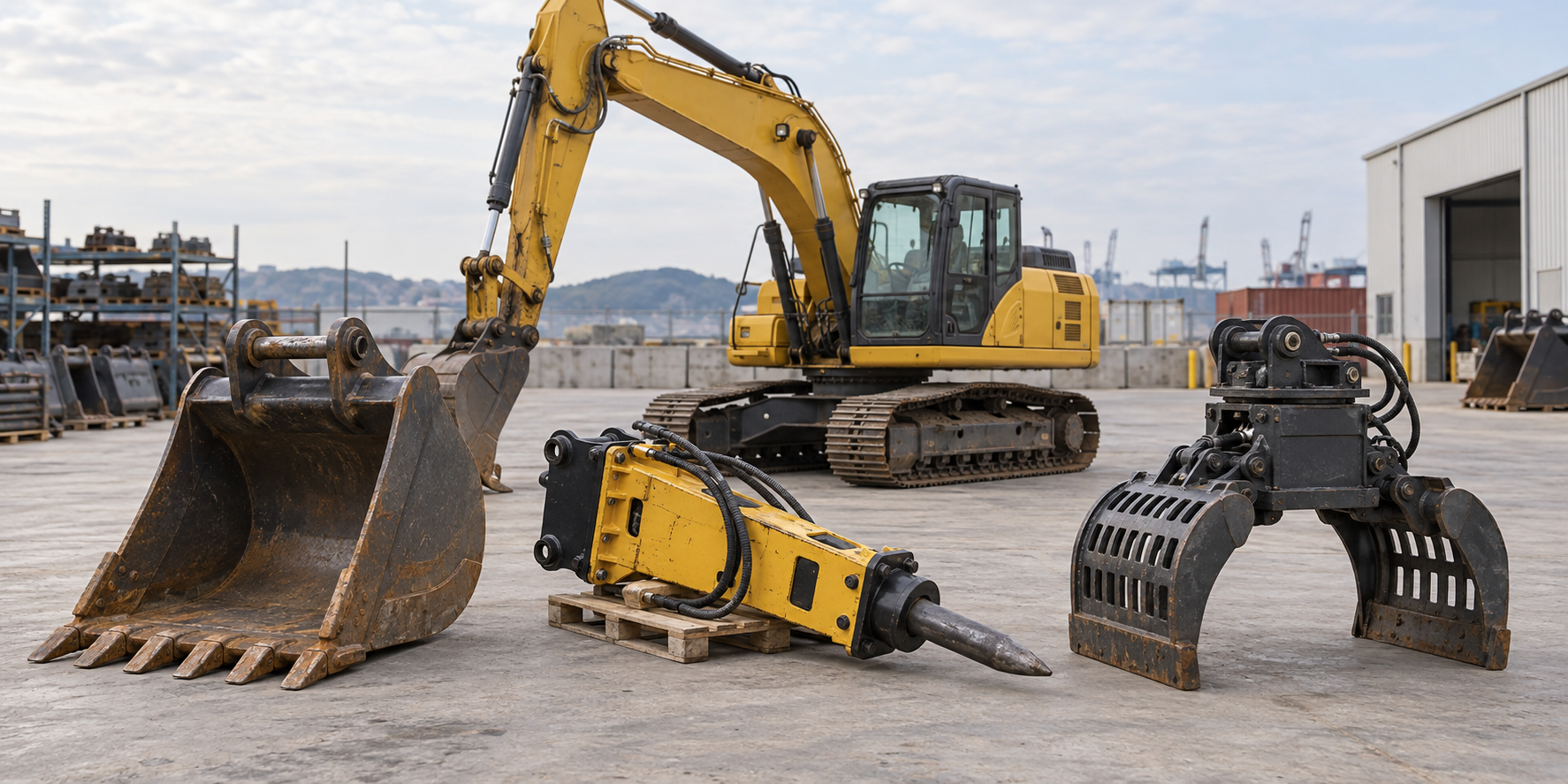
When buying a used excavator, the machine itself is only part of the working package. The bucket, breaker, grapple, quick coupler, and hydraulic setup determine what the excavator can actually do after it reaches the jobsite. Choosing an attachment after the machine has shipped can create avoidable cost, compatibility questions, and delays.
Before asking for a quotation, buyers should describe the intended work, the material to be handled, the target excavator model, and the destination port. This gives the supplier a practical starting point for checking whether the requested attachment is suitable for the machine and for export packing.
Terms such as “bucket,” “hammer,” or “grapple” are broad. A trenching bucket, heavy-duty rock bucket, skeleton bucket, tilt bucket, and grading bucket all serve different work. A hydraulic breaker for a compact excavator is not automatically suitable for a 20-ton machine. A grapple also needs to match the material, opening size, rotation requirement, and hydraulic configuration.
Give the supplier a clear use case first. For example: trench excavation in soft soil, demolition of concrete, loading scrap, clearing logs, sorting stone, or final grading. That detail is more useful than asking only for “one attachment,” because it helps define the working size and wear protection needed.
A digging bucket should be selected around the material and the excavator’s capacity. Wider buckets can move more light material, while narrow buckets are more appropriate for trenches. Work in rock or abrasive ground may require reinforced side plates, stronger teeth, wear strips, or additional protection. For finishing and leveling work, a smooth grading bucket can be a better fit than a general digging bucket.
Before confirming a used bucket, request current photos of the cutting edge, teeth, side wear, mounting ears, pin holes, and weld areas. Look for uneven wear, cracks, repaired sections, or elongated pin holes. Normal working marks are expected on used equipment, but a close inspection helps the buyer understand what condition is included in the price.
A hydraulic breaker is commonly used for concrete, rock, pavement, and demolition work. The key question is not simply whether the breaker looks large enough. It must be matched to the excavator’s operating weight, hydraulic flow, pressure range, hose arrangement, and mounting bracket. An incorrectly matched breaker can perform poorly and may create unnecessary stress on the machine or attachment.
Ask for the breaker model, its stated operating range, photos of the tool and housing, and a working video when available. The video should show the attachment mounted on the excavator that will operate it, not only a separate close-up. Buyers should also confirm whether the quoted machine has the required auxiliary hydraulic lines or whether they need to be installed.
Grapples can be used for scrap, logs, demolition material, stone, and sorting work. The shape, tine spacing, jaw opening, and rotation option should follow the material being handled. A sorting grapple may allow soil or smaller material to fall through, while a stronger demolition or orange-peel style grapple may suit different loading work.
For a used grapple, request photos from the front, side, and mounting area. Check the jaw edges, pivot points, hydraulic cylinders, hoses, rotation motor if fitted, and any visible repairs. It is also useful to confirm whether the grapple needs one or two hydraulic circuits, because this affects compatibility with the selected excavator.
Even a suitable attachment cannot be used efficiently if the mounting dimensions do not match. Before payment, confirm the excavator model, boom and arm configuration, pin diameter, pin center distance, stick width, and whether a quick coupler is already fitted. If a coupler is included, ask whether it is compatible with the bucket or other attachment in the quotation.
For hydraulic attachments, clarify the hose connection position and the available auxiliary lines. A supplier can help check the basic fit, but buyers should also share any jobsite-specific requirements with their operator or technician before ordering.
When purchasing a machine and attachment together, ask for one current photo set and a continuous video that shows both items. The quotation should describe the excavator and attachment separately, including the model or type, included hoses or coupler, and agreed condition. This makes the order easier to review before export documents and packing are arranged.
Attachments add dimensions and weight to the shipment. Ask early how the chosen bucket, breaker, or grapple will be secured and whether it affects the proposed loading plan. The final shipment method depends on the equipment size, destination, carrier options, and local import requirements.
SHUNXIN can provide current photos, available machine details, and export quotations for used excavators. Browse available used excavators or send your target model, attachment requirement, and destination to request a practical equipment package quotation.
2026 © Shun Xin Construction Co Ltd,. All Right Reserved.


 EN
 ES
 FR
 RU
 AR
 PT